
Learn the art of how to lay herringbone wood floor with our comprehensive guide. Discover step-by-step instructions and expert tips to achieve a timeless and elegant herringbone pattern in your space.
Introduction
Embarking on the journey to lay a herringbone wood floor opens the door to a realm of timeless elegance and craftsmanship. This intricate pattern, reminiscent of fishbones, adds a touch of sophistication to any space, whether modern or traditional. In this guide, we will unravel the secrets to mastering the art of laying herringbone wood flooring, from selecting the right materials to executing precise installation techniques. Let’s delve into the steps required to transform your floor into a stunning work of art that will captivate for generations to come.
Table of Contents
What is Herringbone?
At its core, herringbone is a distinctive pattern characterized by a series of parallel lines that intersect at a 45-degree angle to form a V-like shape, resembling the bones of a fish—hence the name. This pattern is renowned for its symmetry, creating a visually striking effect that seamlessly blends classic charm with contemporary flair.
Origins and History:
The origins of the herringbone pattern can be traced back centuries, with its roots embedded in ancient Roman architecture and military attire. The Romans ingeniously utilized this pattern in their roads and structures, enhancing both durability and aesthetics. Over time, the herringbone motif transcended its utilitarian origins, gracing the attire of nobility and aristocracy across Europe.
Applications in Fashion:
In the realm of fashion, herringbone has emerged as a perennial favorite, adorning a wide array of garments and accessories. From tailored suits to cozy winter coats, this pattern exudes sophistication and refinement. Its intricate weave adds texture and depth to fabrics, elevating even the simplest of ensembles to sartorial excellence.
Interior Design:
Beyond the world of fashion, herringbone has made a significant impact in interior design. Whether it’s hardwood flooring, ceramic tiles, or textiles, the herringbone pattern infuses spaces with a sense of elegance and character. Its versatility allows it to complement a myriad of design styles, from traditional to modern, making it a timeless choice for discerning homeowners and designers alike.
Construction and Technique:
Creating a herringbone pattern requires meticulous attention to detail and precision. Whether weaving fabric or laying tiles, artisans employ specialized techniques to achieve the perfect alignment and symmetry. The result is a visually captivating pattern that exudes craftsmanship and artistry.
Modern Interpretations:
While herringbone has deep historical roots, its appeal remains as relevant as ever in the modern world. Designers continue to reimagine this classic motif, experimenting with different materials, colors, and scales. From bold graphic prints to subtle tonal variations, herringbone patterns offer endless possibilities for creative expression in contemporary design.
How to lay herringbone wood floor?
Are you ready to elevate the aesthetic appeal of your space with the timeless elegance of a herringbone wood floor? Congratulations! You’re about to embark on a journey that will transform your room into a masterpiece of design. But before you dive in, let’s walk through the process step by step to ensure your herringbone flooring project is a resounding success.
Step 1: Gather Your Materials
First things first, gather all the necessary materials. You’ll need herringbone wood flooring planks, adhesive (preferably a strong, flexible one suitable for wood flooring), a notched trowel, a saw (jigsaw or miter saw), a pencil, a tape measure, a chalk line, spacers, a tapping block, a hammer, and a level.
Step 2: Prepare the Subfloor
Ensure your subfloor is clean, dry, and level. Remove any existing flooring material and make any necessary repairs. If installing over concrete, consider using a moisture barrier.
Step 3: Plan Your Layout
Planning is crucial when laying herringbone flooring. Start by finding the center of the room and mark it. Then, use a chalk line to create a centerline from one end of the room to the other. This will serve as your guide for laying the first row of planks.
Step 4: Lay the First Row
Begin laying the first row of planks along the centerline, applying adhesive to the back of each plank and pressing firmly into place. Use spacers to maintain consistent gaps between the planks and ensure they are aligned properly.
Step 5: Cut Planks as Needed
As you work your way across the room, you’ll inevitably encounter areas where planks need to be cut to fit. Measure carefully and use a saw to make precise cuts, ensuring a snug fit against walls and obstacles.
Step 6: Create the Herringbone Pattern
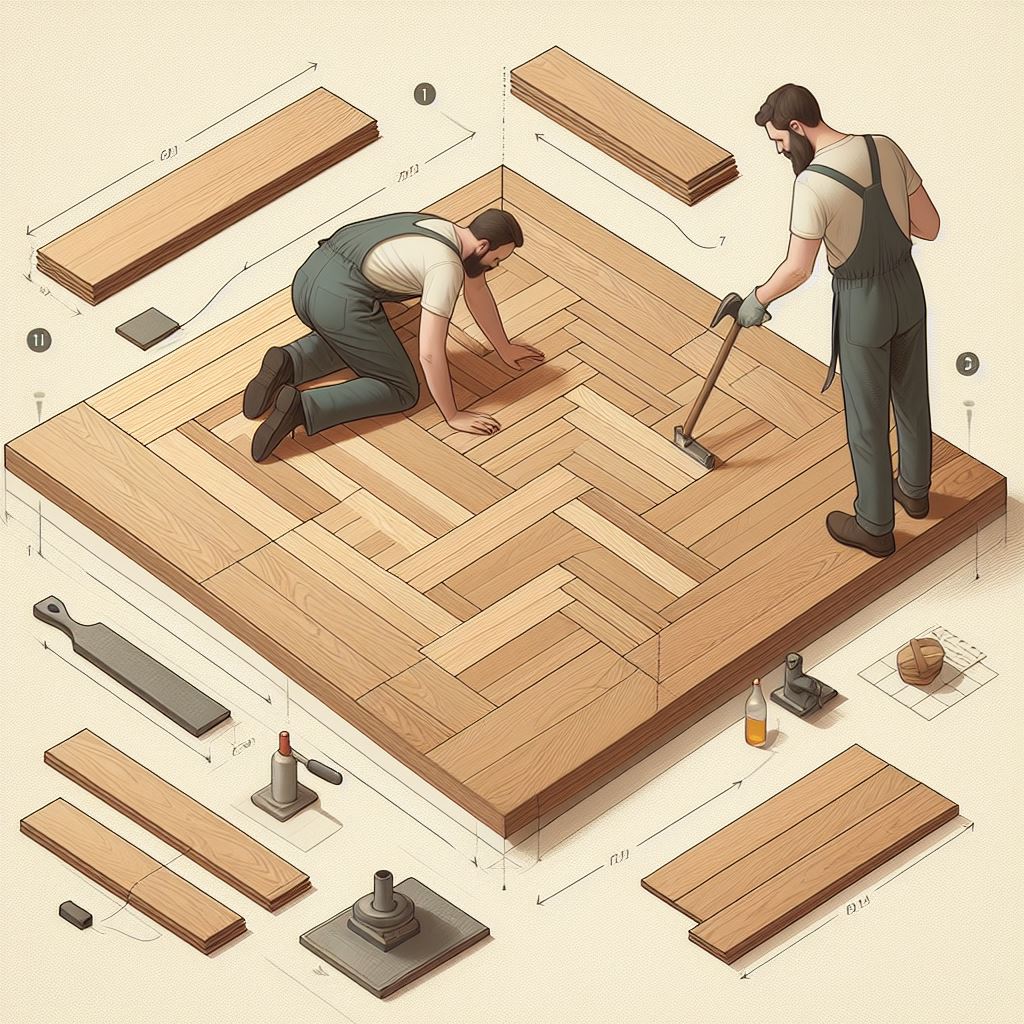
Once the first row is in place, it’s time to create the herringbone pattern. Start by cutting the first plank at a 45-degree angle. Use this angled plank as a template to cut the remaining planks, alternating the direction of the angle to create the classic herringbone pattern.
Step 7: Apply Adhesive and Lay Planks
Apply adhesive to the back of each plank and press them into place, following the herringbone pattern. Use a tapping block and hammer to ensure the planks are snugly fitted together.
Step 8: Complete the Installation
Continue laying planks until the entire floor is covered, periodically checking for level and adjusting as needed. Once complete, allow the adhesive to cure according to the manufacturer’s instructions before walking on the floor.
Step 9: Finishing Touches
Once the adhesive has fully cured, remove the spacers and fill any gaps between planks with wood filler. Finally, apply a coat of sealant or finish to protect your new herringbone wood floor and enhance its beauty for years to come.
And there you have it – a stunning herringbone wood floor that will be the envy of all who enter your space. Enjoy the satisfaction of a job well done and bask in the timeless elegance of your newly transformed room!
How to lay herringbone wood floor?
Are you ready to elevate the aesthetic appeal of your space with the timeless elegance of a herringbone wood floor? Congratulations! You’re about to embark on a journey that will transform your room into a masterpiece of design. But before you dive in, let’s walk through the process step by step to ensure your herringbone flooring project is a resounding success.
Step 1: Gather Your Materials
First things first, gather all the necessary materials. You’ll need herringbone wood flooring planks, adhesive (preferably a strong, flexible one suitable for wood flooring), a notched trowel, a saw (jigsaw or miter saw), a pencil, a tape measure, a chalk line, spacers, a tapping block, a hammer, and a level.
Step 2: Prepare the Subfloor
Ensure your subfloor is clean, dry, and level. Remove any existing flooring material and make any necessary repairs. If installing over concrete, consider using a moisture barrier.
Step 3: Plan Your Layout
Planning is crucial when laying herringbone flooring. Start by finding the center of the room and mark it. Then, use a chalk line to create a centerline from one end of the room to the other. This will serve as your guide for laying the first row of planks.
Step 4: Lay the First Row
Begin laying the first row of planks along the centerline, applying adhesive to the back of each plank and pressing firmly into place. Use spacers to maintain consistent gaps between the planks and ensure they are aligned properly.
Step 5: Cut Planks as Needed
As you work your way across the room, you’ll inevitably encounter areas where planks need to be cut to fit. Measure carefully and use a saw to make precise cuts, ensuring a snug fit against walls and obstacles.
Step 6: Create the Herringbone Pattern
Once the first row is in place, it’s time to create the herringbone pattern. Start by cutting the first plank at a 45-degree angle. Use this angled plank as a template to cut the remaining planks, alternating the direction of the angle to create the classic herringbone pattern.
Step 7: Apply Adhesive and Lay Planks
Apply adhesive to the back of each plank and press them into place, following the herringbone pattern. Use a tapping block and hammer to ensure the planks are snugly fitted together.
Step 8: Complete the Installation
Continue laying planks until the entire floor is covered, periodically checking for level and adjusting as needed. Once complete, allow the adhesive to cure according to the manufacturer’s instructions before walking on the floor.
Step 9: Finishing Touches
Once the adhesive has fully cured, remove the spacers and fill any gaps between planks with wood filler. Finally, apply a coat of sealant or finish to protect your new herringbone wood floor and enhance its beauty for years to come.
And there you have it – a stunning herringbone wood floor that will be the envy of all who enter your space. Enjoy the satisfaction of a job well done and bask in the timeless elegance of your newly transformed room!
Benefits of herringbone
In the vast tapestry of design and aesthetics, certain patterns emerge as timeless classics, captivating the imagination with their beauty and versatility. Among these, the herringbone pattern stands out as a true icon, celebrated for both its visual appeal and practical benefits. Let’s delve into the myriad advantages that herringbone patterns bring to various aspects of design and craftsmanship.
Enhanced Visual Appeal:
One of the most prominent benefits of herringbone patterns lies in their ability to elevate the visual appeal of any space or object. The distinctive V-shaped arrangement creates a sense of movement and dynamism, drawing the eye and adding depth to the surface. Whether adorning a floor, wall, or fabric, herringbone instantly infuses a touch of elegance and sophistication.
Timeless Elegance:
Unlike fleeting design trends that come and go, herringbone patterns boast a timeless quality that transcends the whims of fashion. With roots dating back centuries, this classic motif has stood the test of time, gracing everything from ancient Roman roads to modern-day interiors. Incorporating herringbone into your design scheme ensures a look that remains effortlessly chic and relevant for years to come.
Versatility in Design:
Another key advantage of herringbone patterns lies in their remarkable versatility. Whether rendered in wood, tile, fabric, or even metal, the herringbone motif seamlessly adapts to a wide range of materials and applications. From sleek and modern to rustic and traditional, herringbone patterns can complement virtually any design aesthetic, making them an invaluable tool for designers and homeowners alike.
Illusion of Space:
In interior design, herringbone patterns can be strategically deployed to create the illusion of space and openness within a room. When used on flooring or walls, the angled arrangement of the pattern can visually elongate the space, making it appear larger and more expansive. This makes herringbone particularly well-suited for smaller rooms or areas where maximizing perceived space is desired.
Durability and Longevity:
Beyond their aesthetic appeal, herringbone patterns also offer practical benefits in terms of durability and longevity. Whether in the form of hardwood flooring, ceramic tiles, or woven fabrics, the interlocking nature of the herringbone weave enhances structural integrity and resilience. This makes herringbone-patterned surfaces highly resistant to wear and tear, ensuring years of enjoyment and use.
Artistic Expression:
Finally, herringbone patterns provide a canvas for artistic expression and creativity. Designers and artisans can play with scale, color, and texture to create unique interpretations of this classic motif, imbuing it with a sense of individuality and personality. Whether subtle and understated or bold and dramatic, herringbone patterns allow for endless possibilities for creative exploration and experimentation.
FAQ’s
Is herringbone flooring easy to lay?
Our Herringbone laminate floorboards are designed with a user-friendly click system, making installation a breeze. With this feature, the most popular and DIY-friendly method is floating installation, which doesn’t necessitate any specialized skills or prior experience. The flooring effortlessly clicks together, simplifying the process for homeowners.
How do you start off herringbone flooring?
To begin creating a herringbone design, it’s best to start from a central axis. You can achieve this by using a chalk line or a straight edge to mark the center of your room and create the ‘X’ line. Then, a second line should be drawn to intersect this line at a 90-degree angle, forming the ‘Y’ line. This approach ensures proper alignment and symmetry for your herringbone pattern.
Which direction should herringbone floor be laid?
Typically, herringbone patterns look aesthetically pleasing when laid along the length of the room. However, in cases where there are large patio doors opening to a garden, it might be visually appealing to orient the herringbone pattern towards the garden instead.
What is the disadvantage of herringbone flooring?
While herringbone vinyl flooring offers numerous advantages, it’s important to acknowledge its drawbacks: Complex Pattern Installation: Despite the convenience of the click-lock system, the intricate alignment and angling needed for a herringbone pattern may pose difficulties for inexperienced installers.
Can you lay herringbone straight?
By alternating herringbone blocks and long-length planks, a straight-line design can be achieved. This layout maximizes the utilization of tight and narrow spaces that desire the elegance of herringbone flooring.
Conclusion
Laying a herringbone wood floor requires careful planning, precise measurements, and attention to detail. By following the steps outlined in this guide, you can achieve a stunning herringbone pattern that adds timeless elegance to any space. Remember to start from a central axis, use quality materials, and take your time to ensure proper alignment and symmetry. With patience and diligence, you’ll be rewarded with a beautifully crafted floor that will be the envy of all who behold it.


